Analysis

Analysis

Moment of Truth for the ‘Playground of Empires’

Moment of Truth for the ‘Playground of Empires’

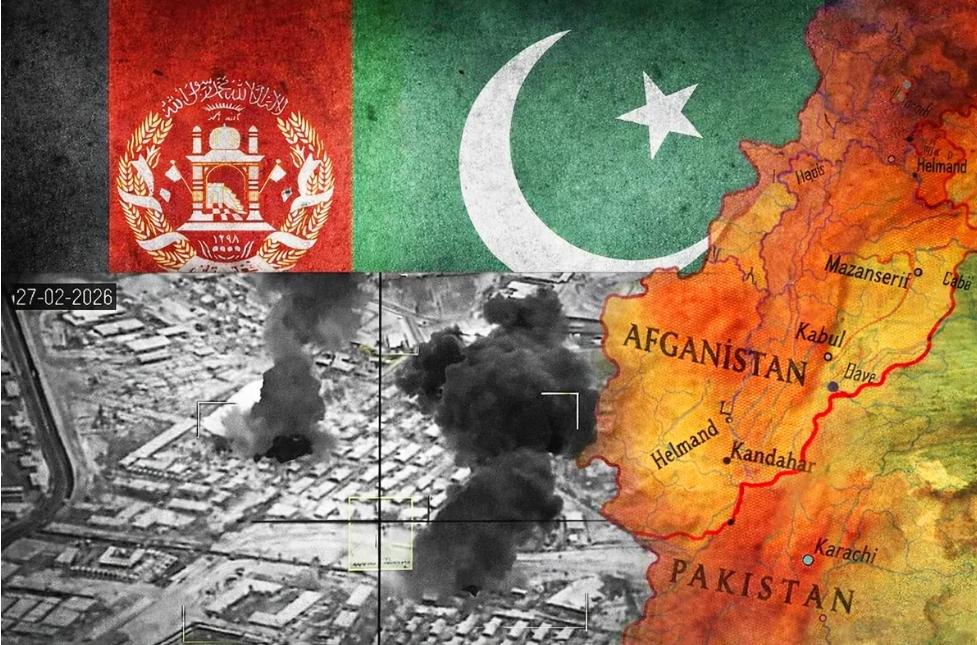
Author: Muhammad Izhar Alam Moment of Truth for the ‘Playground of Empires’ The test was simple: One should be able to sit in a pub and cheer for the English cricket team. It was proposed by member of a British Parliament Norman Tebbit decades ago, at a time when the question about how to find appropriate linkage between the loyalty of incoming migrants, to their commensurate grant of citizenship rights, was burning issue of political debate in the UK. Having served on Thatcher’s cabinet as Chancellor and Chairman of the Conservative Party as well as Secretary for Employment, and Trade & Industry, Tebbit’s proposed test continues to be a simple litmus to determine whether the incoming migrants and their children want to integrate and contribute to the nation which hosts them; or challenge it The flow of migrants from Afghanistan eastwards started to increase in 1970s. In the last five decades Pakistan has so far hosted around 4-5 Million Afghans, who fled either communist onslaught, conflict or chaos. The host country generously provided them shelter and safety in rural and urban areas, besides giving them unrestricted access to public healthcare, education, subsidized food and economic opportunities – the like of which is not seen in near or far past anywhere in the world. How critically the prized asset ‘economic access to markets’ drives national growth; a glimpse is seen in US threats of tariffs for greater access to lucrative markets of India, and consequential Indian struggle to endure economic coercion. Pakistan, contrarily had a culture of issuing beneficent ‘royal-like decrees’ for its Afghan brethren for decades. The host country provided Afghanistan with access and free passage of goods and services – imposing a direct cost of around $4-5 Bn per annum in addition to making local industries suffer a comparative and competitive disadvantage. Adding to the agony was the fact that Pakistan also continued to subsume the migrants who brazenly used informal economic networks to their own advantage, shifting the burden to Pakistani Rupee. The undocumented Afghans still circumvent all official protocols and continue to do business in construction, transport, logistics, food, retail and wholesale trade at the cost of donor nation. Despite the unprecedented favours as well as tribal, familial, linguistic and religious linkages; the Afghans were visibly kicking the boat that landed them, nurturing grudges and displaying ingratitude. Public brawls with Pakistanis fans and cheering against them remained a common spectacle during cricket matches – a litmus indicator. Post US withdrawal from Afghanistan in 2021, there was a sharp surge in terrorist attacks emanating from Afghan soil. The prodromal symptoms were missed and Pakistan continued to remind Afghans of their fundamental commitment in Doha agreement: prevent any terror group to operate from their land. Anticipation was that Afghan setup would be able   to take concrete actions against the Taliban and Indian proxies operating from their land, in return for countless favours granted by Pakistan for decades. It only resulted in terrorism from Afghan soil reaching fever pitch and Taliban leadership issuing fatwas, legitimizing terrorist attacks against Pakistan – contributing to rising number of Afghans aiding, abetting and executing terror attacks inside Pakistan. Just as an elder brother looking at the bigger scheme of things, Pakistan still ignored the bite on its feeding hand, leniently considered various cross border attacks as mere ‘tactical irritants’ and rather chose to postpone using its economic, social and military leverages over its landlocked Muslim neighbour. All the while, bilateral trade concessions and humanitarian assistance continued, and parasitic mode of economy was concurrently being understood by Afghans as their birth right. Restraint has almost always been interpreted by tribal Afghans as appeasing – and negotiating from a place of insecurity. Unfolding the present one more time, merely saw it rhyme with the past. Persuasion-based reconciliation by Pakistan failed miserably – as it was bound to, more so in a tribal society whose strategic culture has forever respected power more than diplomacy, and which has historically seen the issues of security and power being settled by blood and iron. After some strategic recalibration by the incumbent, Pakistan finally decided to stop treating Afghans as mere brethren and follow established diplomatic and legal protocols, like all other countries of the world. The latest cross border aggression by the Taliban last  month – while Interim Afghan Foreign Minister, then in India, made a reference to disputed  territory of Kashmir as part of India – had to be responded. Immediate ceasefire request through common friends implied rattled Afghan nerves, as they realized that velvet glove is being removed from the iron fist. Three rounds of mediated Pak-Afghan talks have hitherto remained inconclusive though. That trajectory is unlikely to change, as Taliban are still unwilling to let go of their only politico-military leverage against their Eastern neighbour – tolerating and harbouring anti-Pakistan elements and encouraging them to carry out cross border militancy in Pakistan. Afghanistan continues to term terrorism as internal issue of Pakistan, conveniently setting aside its own end of the bargain of Doha agreement; while Pakistan appears willing to use its lethal and dominant kinetic force as final arbiter of any Afghan mis-adventurism. Being a landlocked country itself, and neigbours with three other landlocked countries, Afghanistan has little hope and much dependencies in trade and connectivity. It also has huge trade imbalance with all its other neighbours (approximately 8-10 times higher imports than exports, for an overall volume of approximately $4Bn) and Pakistan continues to be a free economic-run for Afghans, giving them the easiest and highest earning without any regulation. Abundant economic alternatives exist for major Afghan exports to Pakistan (vegetables, fruits and rugs) from other neighbouring countries (Iran,   Uzbekistan and Tajikistan); while the Afghans exactly know that corresponding matrix for alternate trade is unfavourably stacked against them. Had Pakistan pulled its trade lever when it had aligned itself with global war on terror, Afghanistan would have bled white in such a manner that the two centuries old Clausewitzian dictum would have emphatically

Moment of Truth for the ‘Playground of Empires’ Read More »

South Korea’s KF-21 Could Open a New Door for Pakistan

South Korea’s KF-21 Could Open a New Door for Pakistan

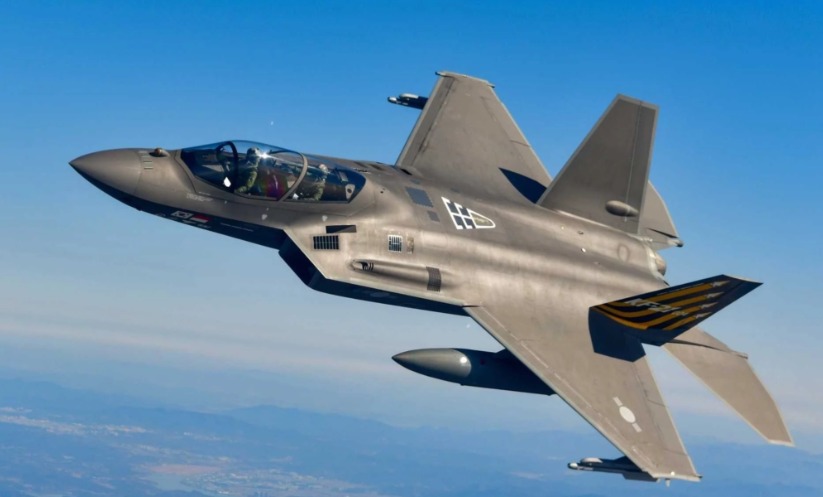
Author: Nimra Fatima South Korea’s KF-21 Could Open a New Door for Pakistan Some of South Korea’s defense export contracts in 2022 reached a total of more than $17 billion, the highest in its history. Buyers included Poland, Australians and the UAE. The most attention garnered was not for a missile or a warship. It was a fighter jet designed, engineered and built from scratch in Seoul. South Korea is no longer just an electronics giant known for Samsung and Hyundai. Over the last decade, it has quietly become one of the world’s most serious defense manufacturers. From tanks and artillery to submarines and fighter aircraft, Seoul is now competing in a space once dominated by the United States, Russia, and a handful of European states.  The clearest example of this rise is the KF-21 Boramae fighter jet. The KF-21 matters because it reflects a new kind of military thinking. Many countries cannot afford platforms like the F-35, while older fourth-generation aircraft are becoming less effective in modern warfare. South Korea saw this gap and decided to build something in between, advanced enough for future combat, but still realistic in cost and maintenance. For Pakistan, this should attract attention. Pakistan’s defense planning has traditionally relied on a limited number of partners. China remains central to Islamabad’s military modernization, especially through projects like the JF-17 and newer systems such as the J-10C. But relying too heavily on one ecosystem always carries risks. Strategic flexibility matters, especially in a region where security dynamics are constantly shifting. That is why South Korea deserves a closer look. The Pakistan Air Force has built valuable experience in co-production and aircraft development through the JF-17 program. South Korea, meanwhile, is actively looking for international defense partners and export markets as it expands its industry. There may not be an immediate path toward acquiring the KF-21 itself, but cooperation does not always begin with headline deals. There are many smaller but important areas where both sides could work together: maintenance, avionics, pilot training, aerospace components, naval systems, or even joint research in emerging technologies. Pakistan’s defense industry needs diversification and modernization. South Korea needs reliable long-term partners in Asia and the Muslim world. The overlap is obvious.  This is not only about fighter jets. South Korea’s defense success comes from something deeper: long-term investment in technology, manufacturing, and industrial planning. It transformed itself from a country dependent on foreign security assistance into a state capable of exporting advanced military systems across the world. Pakistan should pay attention to that model. Too often, defense discussions in Islamabad focus only on procurement: buying the next aircraft, submarine, or missile system. But the real challenge is industrial capacity. Which countries will actually be able to design, produce, maintain, and upgrade advanced systems over the next twenty years? That is where future military strength will come from.  The KF-21 symbolizes that shift. Of course, there are political realities. South Korea has strong relations with the United States and growing economic ties with India. Any major Pakistan–South Korea defense relationship would have limits. But international politics is rarely black and white. Countries pursue interests, markets, and strategic influence wherever opportunities exist.  Pakistan should do the same. A smarter defense policy is not about replacing one partner with another. It is about expanding options. In an uncertain world, countries that maintain multiple defense and technology relationships are usually the ones with greater strategic freedom. South Korea’s rise in the defense sector is one of the most important developments in Asia today. Pakistan should not watch it from a distance. Ms. Nimra Fatima Nimra Fatima is an Mphil International Relations Scholar at Quaid-e-Azam University, Islamabad.

South Korea’s KF-21 Could Open a New Door for Pakistan Read More »

Navigating the Geopolitical Chessboard:

Navigating the Geopolitical Chessboard: Pakistan’s Hedging Strategy Between China andthe United States

Author: Shahid Hayat Introduction: The structure of Strategic Ambiguity Nothing in the history of post Cold War geopolitics could be more continually challenged and yet more thoroughly misinterpreted than the efforts of the Pakistan’s foreign policy to pursue its national agenda towards the People’s Republic of China and the United States of America. Islamabad sits at a strange, risky cross roads in the present international system, deeply involved in China’s Economic Belt and Road Initiative, a history of strategic and military entanglements with the USA and squandered on the windswept interface of what is emerging as a rising Sino-American conflict. It is to assume a simplistic policy flip flopper or opportunist hedging strategy to describe Pakistan’s foreign policy actions is to miss the penetrating rationales behind the operations of a policy machinery which is under the permanent structural constraints. As the growing body of scholarship now suggests, however, what has developed is a complex and carefully calculated approach to hedging: a strategy that aims to induce ambiguity, purposefully fragment alliance possibilities and enhance national returns amid uncertain geopolitical circumstances. Balancing and hedging are not abstract concepts that are merely theoretical, but rather ones that are of critical strategic importance to the operation. In its classic realist sense, balancing means a state using its own resources and/or developing alternative counterweight coalitions to resist a threat it perceives. In contrast, hedging is an adaptive and ambivalent approach that contains aspects of engagement and “quasi balancing,” of cooperative and resistant elements, but at the same time does not fully accept either. Theories of hedging hold that it is the act of a state to mitigate risk through simultaneously pursuing policy options that they believe will achieve mutually offsetting outcomes in the face of a high threat and high uncertainty environment. In essence, it was a baksheesh of strategic non clarity and that is the very framework which reveals Pakistan’s present foreign policy thinking. Historical Foundations: From Alignment to uncertainty What drove Pakistan’s evolution of foreign policy from a true American ally to a nation that practices “double speak” in its relations with Washington is not something that happened overnight. Criticized by Pakistanis for being too tepid in its backing of Islamists, the country is a victim of forty years of bitter history as a great power client. In the immediate post independence period, Pakistan was completely oriented towards the western bloc, having joined SEATO and CENTO, mainly for reasons of security from India and need of economic and military support. Washington did not just offer her aid, but proved be an existential guarantor This alignment, nonetheless, contained the potential for its own breakdown. The United States consistently deliberated that its obligations to Pakistan were consistently secondary to larger American strategic interests, interests that Pakistan did not always endorse and could not always control. The relations with China, on the other hand, was based upon a different cupidity. Since the boundary agreement of 2 March 1963, Sino-Pakistan relations were fueled by shared common antagonism to India, a lack of colonial feelings and a recognition of mutual interests. From its very inception, Beijing viewed the Islamabad as having strategic value and this is eloquently expressed in Chairman Mao Zedong’s directive to his second envoy to Pakistan to view Islamabad as ‘China’s window to the west’. In response, Pakistan did its best to help China in its diplomatic rehabilitation, towards the position especially of Beijing on Taiwan, Tibet and the position in the United Nations Security Council. The opening of Khyber Pakhtunkhwa’s Karakoram Highway (KKH) was merely a formalization of an enduring geopolitical arrangement. But, what is important is that the Sino-Pakistani relationship was not primarily ideological; it was strategic and transactional and such partnerships are more likely to withstand the test of time than ideological ones. The Structural Drivers of Hedging: Disillusionment and Diversification Studying the indicators of these drivers to opt hedging strategies: disillusionment and diversification proved to be constant factors to determine hedging policies of Pakistan. The post 9/11 era seemed to foster new, moderate terms to the Pakistan-US relationship at first glance. Perceived as the ally in the global war on terror, Pakistan received a lot of military and economic support from the coalition, in the form of Coalition Support Fund, Foreign Military Funding, and International Military Education and Training programmes. However, the inconsistencies that were ingrained in this structure were readily apparent from the start. Some specific events were significant structural accelerants of Pakistani disillusionment: American drone strikes on Pakistani territory without any significant notification; suspension of military assistance during Obama and Trump administrations as a result of the lack of action by Pakistan’s security intelligence agencies against militant groups, and the most harrowing – the May 2011 Special Operations in Abbottabad in order to kill Osama bin Laden. The Abbottabad incident was of prime significance. It was denounced by all tiers of the Pakistani political establishment as an infringement on national sovereignty and led to a parliamentary resolution calling on Parliament to review the ties with Washington in general. Closure of NATO supply routes by Pakistan symbolically and materially was a severance with a great intensity. In this context, the growing economic and strategic involvement of China brought not just an alternative option, but a counterweight, an option available to Islamabad which would allow Pakistan to balance off the pressure coming from the United States without completely severing ties with the West. The leaked State to State document, written by former Minister of State, Hina Rabbani Khar and titled ‘Pakistan’s Difficult Choices,’ merely shared an observation long attributed to the Pakistani policymakers: a sense of their inability to navigate between Beijing and Washington without taking sides; and their concern about what they view as an unavoidable strategic shift and how to manage it. The Economic Dimension: CPEC and Dependence No study of Pakistan’s hedging policies is worthwhile without a close examination of the economic aspect of Sino-Paki relationship, and specifically, China Pakistan Economic Corridor. As it has been since

Navigating the Geopolitical Chessboard: Pakistan’s Hedging Strategy Between China andthe United States Read More »

The Munir-Trump Channel

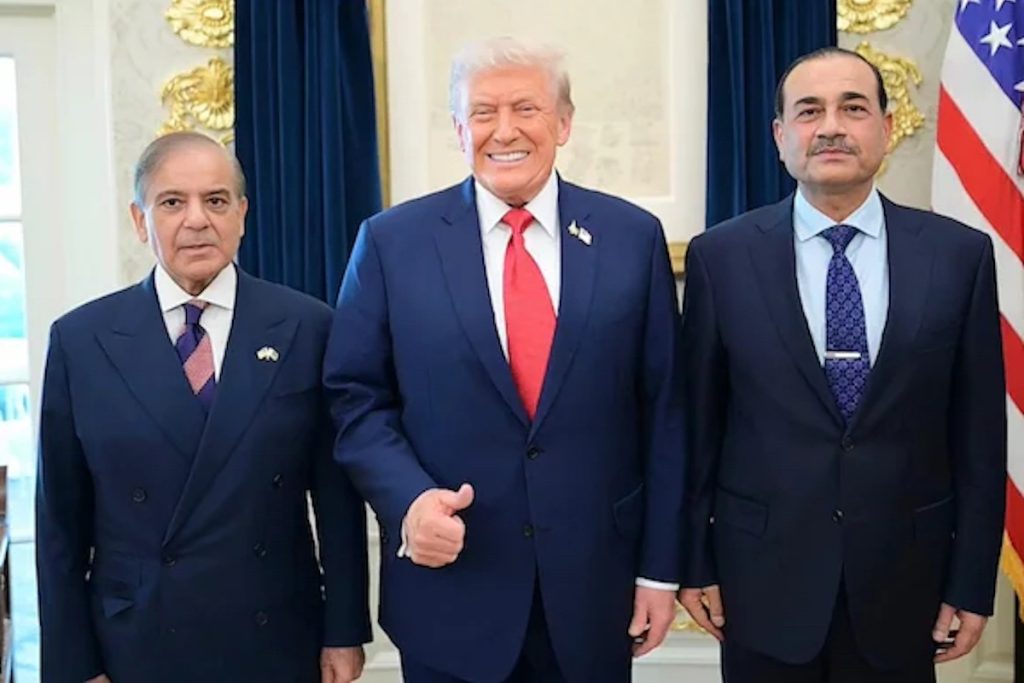
Military Diplomacy and Pakistan’s Foreign Policy Synopsis The op-ed demonstrates that Pakistan achieved its first diplomatic achievement through its mediation of the US-Iran ceasefire on April 8, 2026, because Field Marshal Asim Munir used his personal connection to President Trump to advance Pakistan’s military interests instead of utilizing diplomatic channels that Pakistan’s foreign policy experts had established. It warns against treating this as a replicable template and calls for the urgent institutionalization of Pakistan’s diplomatic gains within civilian structures. Op-Ed On the evening of April 8, 2026, with Donald Trump’s self-proclaimed deadline to end “Iranian civilization” ticking down to its final ninety minutes, it was not Pakistan’s Foreign Minister who picked up the phone. Field Marshal Asim Munir, directly to the President of the United States, placed the call that mattered— the one that gave a world on edge permission to breathe again. Hours later, Trump announced a two-week ceasefire with Iran, explicitly crediting “conversations with Prime Minister Shehbaz Sharif and Field Marshal Asim Munir, of Pakistan.” Pakistan had just pulled off what analysts are already calling the most consequential act of diplomacy in its history. The question worth asking is: why was it the army chief who did it? The division of labour in Pakistan’s Iran mediation was revealing. Prime Minister Shehbaz Sharif engaged Iranian President Masoud Pezeshkian and made the public announcements. However, it was Munir who maintained the direct backchannel to Trump, coordinated with senior US officials, including JD Vance and Steve Witkoff, and kept lines open to figures within Iran’s Islamic Revolutionary Guard Corps. According to foreign affairs journalist Baqir Sajjad Syed, the entire negotiation was conducted through encrypted messaging apps — WhatsApp with the Iranians and Signal with the Americans — with embassies kept deliberately at arm’s length. The civilian government provided the diplomatic cover; the military provided the actual advantage. This is not a criticism of the outcome. But the architecture of that achievement reveals a structural reality that Pakistan has long avoided examining: its foreign policy, at its most consequential moments, is run from Rawalpindi, not Islamabad. The Munir-Trump relationship did not emerge overnight. It was built through deliberate, transactional engagement. The arrest of the Abbey Gate bomber first caught Washington’s attention. The 2025 India-Pakistan conflict cemented it — Trump publicly credited Munir with helping defuse that crisis and subsequently made history by hosting a Pakistani army chief for a White House lunch without a head of state present. It was in that meeting that Trump reportedly hinted Pakistan “knows Iran better than most.” The stage for April 2026 was set over a year earlier, through a personal rapport between a field marshal and a president that bypassed every formal diplomatic channel. What is new under Munir is the degree to which the military’s foreign policy role has been formalized. The 27th Constitutional Amendment created the position of Chief of Defence Forces — a role Munir now holds alongside the army chief, consolidating command over all three services and granting him a tenure extended through 2030. Analysts have noted that this concentration of authority gives Munir “wide latitude to take strategic risks, with few institutional checks on his decisions”. In foreign policy terms, this means Pakistan now has a single powerful individual who can make credible commitments to foreign leaders without parliamentary approval, cabinet sign-off, or opposition buy-in. For crisis diplomacy, this is an asset. For democratic governance, it is a warning sign. The ceasefire’s success will tempt Pakistan into treating the Munir model as the template for future diplomacy. That would be a mistake. Personalized military diplomacy is inherently fragile. It depends on the longevity of the individual, the continuation of a particular foreign leader’s goodwill, and the absence of a domestic crisis that forces the military’s attention inward. Trump will not always be president. Munir will not always be the army chief. And the crises that demand mediation — Iran, India, Afghanistan — will not pause for Pakistan’s internal transitions. A foreign policy architecture built on one man’s phone book is not a foreign policy; it is a gamble dressed as strategy. Pakistan must now do something harder than celebrating. It must institutionalize the gains. The relationships built by Munir with the Trump administration, with Gulf states, with Iranian interlocutors — these need to be transferred into civilian foreign policy architecture. The Foreign Office needs the resources, the personnel, and — critically — the authority to manage these channels independently of GHQ. The National Security Committee needs to function as a genuine civilian-military coordination body, not a rubber stamp for decisions already taken in Rawalpindi. And Pakistan’s parliament, long excluded from meaningful foreign policy debate, needs to be brought in. Sustainable diplomacy requires institutional legitimacy, not just individual brilliance. Pakistan stood at the center of the world on April 8, 2026. South Asia expert Michael Kugelman called it “one of Pakistan’s biggest diplomatic wins in years” — a verdict echoed from Bloomberg to The Diplomat to Al Jazeera. The country earned that moment through years of quiet relationship-building, geographic positioning, and Munir’s particular genius for reading the room. However, the world’s attention is a perishable commodity. The question is not whether Pakistan can broker a ceasefire. It has now proven that it can. The question is whether Pakistan can build a foreign policy establishment worthy of the role it has claimed — one that survives the next election, the next army chief, and the next crisis without needing a field marshal to pick up the phone. Sources / Hyperlinks Used Ms. Munaza Zainab Munaza Zainab is lead operations supervisor at Indus Strategic Institute – ISI and Strategic Studies student

The Munir-Trump Channel Read More »

Critical Minerals and Counterterrorism

Critical Minerals and Counterterrorism

Why Pakistan Is Back in Trump’s Strategic Calculations It is a matter of time before the calibration quietly unfolds in corridors of power in Washington, D.C. Under Donald Trump’s second term, it does not matter much to Pakistan anymore. It has grown into a high-interest strategic factor, fast becoming increasingly influential around the nexuses of domestic politics, global supply chain anxieties, regional security imperatives, and Trump’s transactional style of foreign policy. Where once restlessness and sporadic U.S. aid defined it, today investment deals, trade negotiations, and defense accords redefine it. But in the fierce, media-charged context of America in 2025, this is as much about domestic political advantage as it is necessary. “America First” and the Critical Minerals Strategy: The return of Trump to the White House came with roaring trumpets of building American strength, reducing dependence on foreign enemies, and implementing “America First” in all its aspects – economy, strategy, and politics. Very often do we hear the term “critical minerals.” An executive order signed in April 2025 mandates the launching of a Section 232 investigation into the import dependence of processed critical minerals and derivative products in the United States. This is a measure associated with a wider strategy to strengthen supply chains for particularly critical materials, usually considered essential in defense, clean energy, and high technology. This includes encouraging tax incentives for domestic production, stockpiling by the Pentagon, and removing regulatory impediments. Pakistan’s Resource Appeal and Economic Engagement: In this scenario, Pakistan’s mineral riches look many times more attractive than they did before. Islamabad has been wooing—Prime Minister Shehbaz Sharif has prompted American companies to invest in mining, energy, and agriculture. In July 2025, a trade agreement was signed by the U.S. and Pakistan with an eye toward oil reserves and tariff reductions. The Trump administration’s engagement with the Pakistan Minerals Investment Forum earlier in 2025 indicated to Washington that Pakistan wasn’t just a security concern; it was potentially gaining traction as a supply-chain solution. Strategic Security and Counterterrorism Cooperation: Beyond trade, security issues and counterterrorism operations continue to draw Pakistan closer to the United States. Trump’s candidacy suggested that while politically his view of foreign affairs is transactionally driven, it still considers the existence of militant threats emanating from the borders of Afghanistan with Pakistan as an important matter of national interest. During meetings in Washington, Pakistani leaders have reiterated their willingness to cooperate on these matters. The U.S. requires local partners endowed with the capability of intelligence and being geographically close to unstable areas; Pakistan fits the requirements in ways that many others cannot. Domestic Political Utility for Trump: At home politically, Trump reaps benefits by putting on a show of strength abroad, along with making use of economic leverage. Pittsburgh steelworkers, Midwest auto plants, defense contractors-all have reason to favor policies aimed at supplanting Chinese control over critical minerals and beefing up the base of American industry. The enhanced supply of minerals abroad (or under favorable terms) allows Trump to boast economic wins (investment, jobs) as well as national security wins. Having Pakistan on board for that project buttresses the contention that he is delivering “America First” not just in the U.S. but also in the international domain of counterbalancing power and dependence. Challenges and Contradictions in Bilateral Relations: Yet with any such affair in the Trump administration’s era of policies, so many contradictions would arise in relationships. Trump’s foreign policy is competitive and volatile, unpredictable at times, and very short-sighted. Messages of great expectations have frequently been undermined by political instability, governance weaknesses, or ambivalence regarding U.S. expectations of Pakistan regarding human rights and anti-militancy. This criticism has become an integral part of U.S. domestic politics and applies to both sides of the aisle. It questions whether Pakistan can be trusted, whether taxpayer money or investment guarantees will be put to good use, and whether any cooperation with Pakistan jeopardizes relations with India, an increasingly important U.S. partner in the Indo-Pacific region. Transactionalism and Conditionality: Moreover, the Trump administration has favored making bilateral, transactional deals over building longer-term institutional partnerships. U.S. actions—with tariffs on precious minerals, trade deals, and investment forums—are, however, often conditioned with strings attached and demands for reciprocity. So, Pakistan might get its share of investment and attention from the U.S., but the U.S. would be expecting performance in terms of stability, counter-terrorism cooperation, transparency in contracts, and respect for U.S. strategic interests with regard to India and China. Potential Gains and Strategic Risks for Pakistan: If Pakistan fulfills these expectations, there will be significant dividends: direct foreign investment, infrastructure development, technological transfer, employment opportunities in the mining and energy sectors, and a high salience in regional diplomacy. For Trump, Pakistan doing this serves its role in his ‘supply-chain resilience’ strategy and stabilization efforts for South Asia as not merely foreign policy, but as part of his political narrative. It allows him to showcase successes abroad alongside domestic industrial revival. Risks, however, remain big. If Pakistan fails to deliver, Washington could easily revert to its old habits of disengagement, anger, pressure, or even sanctions against this country. U.S. public opinion is extremely sensitive to corruption or misuse of its aid/investment, attachments to militant groups, or anything that can be perceived as a breach of strategic trust. And given that Trump’s political style rewards visible success and punishes perceived weakness, it behoves Islamabad to generate some of these visible wins, whether in terms of procuring minerals, reducing militant safe havens, or securing and improving trade outcomes. Conclusion: In conclusion, under the Trump administration, sudden requirements make garnishing Pakistan as strategically relevant because of converging demands: the needs of America in securing critical resources, changing security threats in the region, and taking political advantage of showing strength as well as being economical up to a certain point. It still depends on what he does to maintain the relationship rather than becoming another phase of Washington’s episodic interest in Islamabad. The relationship, then, may evolve into more durable and longer-lasting or more

Critical Minerals and Counterterrorism Read More »