Why Pakistan Is Back in Trump’s Strategic Calculations
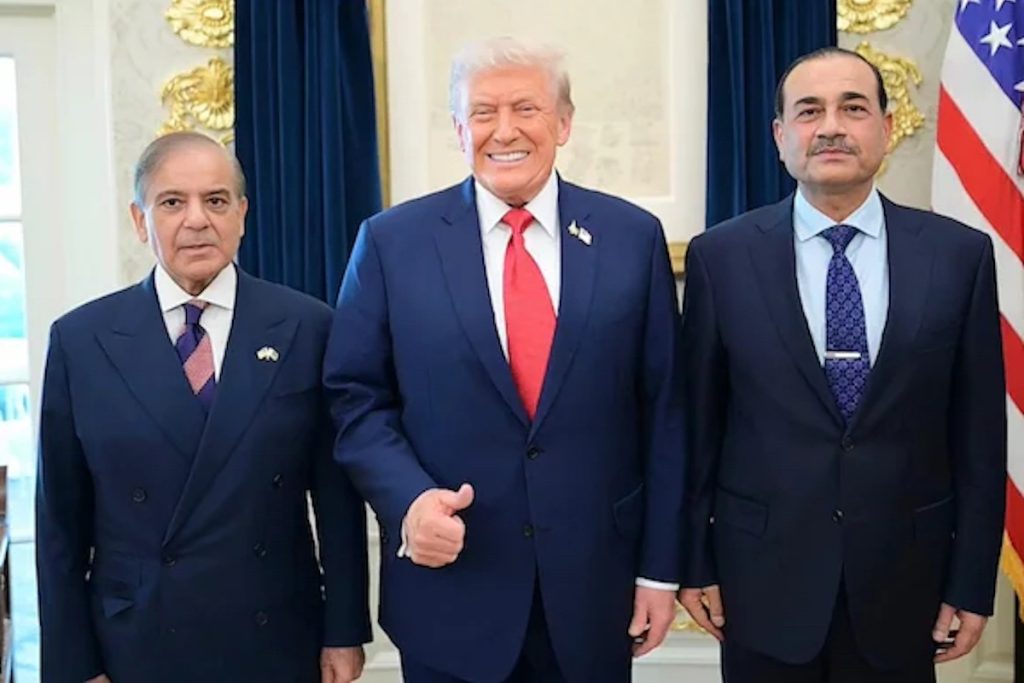
It is a matter of time before the calibration quietly unfolds in corridors of power in Washington, D.C. Under Donald Trump’s second term, it does not matter much to Pakistan anymore. It has grown into a high-interest strategic factor, fast becoming increasingly influential around the nexuses of domestic politics, global supply chain anxieties, regional security imperatives, and Trump’s transactional style of foreign policy. Where once restlessness and sporadic U.S. aid defined it, today investment deals, trade negotiations, and defense accords redefine it. But in the fierce, media-charged context of America in 2025, this is as much about domestic political advantage as it is necessary.
"America First" and the Critical Minerals Strategy:
The return of Trump to the White House came with roaring trumpets of building American strength, reducing dependence on foreign enemies, and implementing “America First” in all its aspects – economy, strategy, and politics. Very often do we hear the term “critical minerals.” An executive order signed in April 2025 mandates the launching of a Section 232 investigation into the import dependence of processed critical minerals and derivative products in the United States. This is a measure associated with a wider strategy to strengthen supply chains for particularly critical materials, usually considered essential in defense, clean energy, and high technology. This includes encouraging tax incentives for domestic production, stockpiling by the Pentagon, and removing regulatory impediments.
Pakistan’s Resource Appeal and Economic Engagement:
In this scenario, Pakistan’s mineral riches look many times more attractive than they did before. Islamabad has been wooing—Prime Minister Shehbaz Sharif has prompted American companies to invest in mining, energy, and agriculture. In July 2025, a trade agreement was signed by the U.S. and Pakistan with an eye toward oil reserves and tariff reductions. The Trump administration’s engagement with the Pakistan Minerals Investment Forum earlier in 2025 indicated to Washington that Pakistan wasn’t just a security concern; it was potentially gaining traction as a supply-chain solution.
Strategic Security and Counterterrorism Cooperation:
Beyond trade, security issues and counterterrorism operations continue to draw Pakistan closer to the United States. Trump’s candidacy suggested that while politically his view of foreign affairs is transactionally driven, it still considers the existence of militant threats emanating from the borders of Afghanistan with Pakistan as an important matter of national interest. During meetings in Washington, Pakistani leaders have reiterated their willingness to cooperate on these matters. The U.S. requires local partners endowed with the capability of intelligence and being geographically close to unstable areas; Pakistan fits the requirements in ways that many others cannot.
Domestic Political Utility for Trump:
At home politically, Trump reaps benefits by putting on a show of strength abroad, along with making use of economic leverage. Pittsburgh steelworkers, Midwest auto plants, defense contractors-all have reason to favor policies aimed at supplanting Chinese control over critical minerals and beefing up the base of American industry. The enhanced supply of minerals abroad (or under favorable terms) allows Trump to boast economic wins (investment, jobs) as well as national security wins. Having Pakistan on board for that project buttresses the contention that he is delivering “America First” not just in the U.S. but also in the international domain of counterbalancing power and dependence.
Challenges and Contradictions in Bilateral Relations:
Yet with any such affair in the Trump administration’s era of policies, so many contradictions would arise in relationships. Trump’s foreign policy is competitive and volatile, unpredictable at times, and very short-sighted. Messages of great expectations have frequently been undermined by political instability, governance weaknesses, or ambivalence regarding U.S. expectations of Pakistan regarding human rights and anti-militancy. This criticism has become an integral part of U.S. domestic politics and applies to both sides of the aisle. It questions whether Pakistan can be trusted, whether taxpayer money or investment guarantees will be put to good use, and whether any cooperation with Pakistan jeopardizes relations with India, an increasingly important U.S. partner in the Indo-Pacific region.
Transactionalism and Conditionality:
Moreover, the Trump administration has favored making bilateral, transactional deals over building longer-term institutional partnerships. U.S. actions—with tariffs on precious minerals, trade deals, and investment forums—are, however, often conditioned with strings attached and demands for reciprocity. So, Pakistan might get its share of investment and attention from the U.S., but the U.S. would be expecting performance in terms of stability, counter-terrorism cooperation, transparency in contracts, and respect for U.S. strategic interests with regard to India and China.
Potential Gains and Strategic Risks for Pakistan:
If Pakistan fulfills these expectations, there will be significant dividends: direct foreign investment, infrastructure development, technological transfer, employment opportunities in the mining and energy sectors, and a high salience in regional diplomacy. For Trump, Pakistan doing this serves its role in his ‘supply-chain resilience’ strategy and stabilization efforts for South Asia as not merely foreign policy, but as part of his political narrative. It allows him to showcase successes abroad alongside domestic industrial revival. Risks, however, remain big. If Pakistan fails to deliver, Washington could easily revert to its old habits of disengagement, anger, pressure, or even sanctions against this country. U.S. public opinion is extremely sensitive to corruption or misuse of its aid/investment, attachments to militant groups, or anything that can be perceived as a breach of strategic trust. And given that Trump’s political style rewards visible success and punishes perceived weakness, it behoves Islamabad to generate some of these visible wins, whether in terms of procuring minerals, reducing militant safe havens, or securing and improving trade outcomes.
Conclusion:
In conclusion, under the Trump administration, sudden requirements make garnishing Pakistan as strategically relevant because of converging demands: the needs of America in securing critical resources, changing security threats in the region, and taking political advantage of showing strength as well as being economical up to a certain point. It still depends on what he does to maintain the relationship rather than becoming another phase of Washington’s episodic interest in Islamabad. The relationship, then, may evolve into more durable and longer-lasting or more temporary and brief connections.

Ms. Munaza Zainab
Munaza Zainab is lead operations supervisor at Indus Strategic Institute - ISI and Strategic Studies student