
Author: Muhammad Izhar Alam
Moment of Truth for the ‘Playground of Empires’
The test was simple: One should be able to sit in a pub and cheer for the English cricket team. It was proposed by member of a British Parliament Norman Tebbit decades ago, at a time when the question about how to find appropriate linkage between the loyalty of incoming migrants, to their commensurate grant of citizenship rights, was burning issue of political debate in the UK. Having served on Thatcher’s cabinet as Chancellor and Chairman of the Conservative Party as well as Secretary for Employment, and Trade & Industry, Tebbit’s proposed test continues to be a simple litmus to determine whether the incoming migrants and their children want to integrate and contribute to the nation which hosts them; or challenge it
The flow of migrants from Afghanistan eastwards started to increase in 1970s. In the last five decades Pakistan has so far hosted around 4-5 Million Afghans, who fled either communist onslaught, conflict or chaos. The host country generously provided them shelter and safety in rural and urban areas, besides giving them unrestricted access to public healthcare, education, subsidized food and economic opportunities – the like of which is not seen in near or far past anywhere in the world.
How critically the prized asset ‘economic access to markets’ drives national growth; a glimpse is seen in US threats of tariffs for greater access to lucrative markets of India, and consequential Indian struggle to endure economic coercion. Pakistan, contrarily had a culture of issuing beneficent ‘royal-like decrees’ for its Afghan brethren for decades. The host country provided Afghanistan with access and free passage of goods and services – imposing a direct cost of around $4-5 Bn per annum in addition to making local industries suffer a comparative and competitive disadvantage. Adding to the agony was the fact that Pakistan also continued to subsume the migrants who brazenly used informal economic networks to their own advantage, shifting the burden to Pakistani Rupee. The undocumented Afghans still circumvent all official protocols and continue to do business in construction, transport, logistics, food, retail and wholesale trade at the cost of donor nation.
Despite the unprecedented favours as well as tribal, familial, linguistic and religious linkages; the Afghans were visibly kicking the boat that landed them, nurturing grudges and displaying ingratitude. Public brawls with Pakistanis fans and cheering against them remained a common spectacle during cricket matches – a litmus indicator.
Post US withdrawal from Afghanistan in 2021, there was a sharp surge in terrorist attacks emanating from Afghan soil. The prodromal symptoms were missed and Pakistan continued to remind Afghans of their fundamental commitment in Doha agreement: prevent any terror group to operate from their land. Anticipation was that Afghan setup would be able
to take concrete actions against the Taliban and Indian proxies operating from their land, in return for countless favours granted by Pakistan for decades. It only resulted in terrorism from Afghan soil reaching fever pitch and Taliban leadership issuing fatwas, legitimizing terrorist attacks against Pakistan – contributing to rising number of Afghans aiding, abetting and executing terror attacks inside Pakistan. Just as an elder brother looking at the bigger scheme of things, Pakistan still ignored the bite on its feeding hand, leniently considered various cross border attacks as mere ‘tactical irritants’ and rather chose to postpone using its economic, social and military leverages over its landlocked Muslim neighbour. All the while, bilateral trade concessions and humanitarian assistance continued, and parasitic mode of economy was concurrently being understood by Afghans as their birth right.
Restraint has almost always been interpreted by tribal Afghans as appeasing – and negotiating from a place of insecurity. Unfolding the present one more time, merely saw it rhyme with the past. Persuasion-based reconciliation by Pakistan failed miserably – as it was bound to, more so in a tribal society whose strategic culture has forever respected power more than diplomacy, and which has historically seen the issues of security and power being settled by blood and iron.
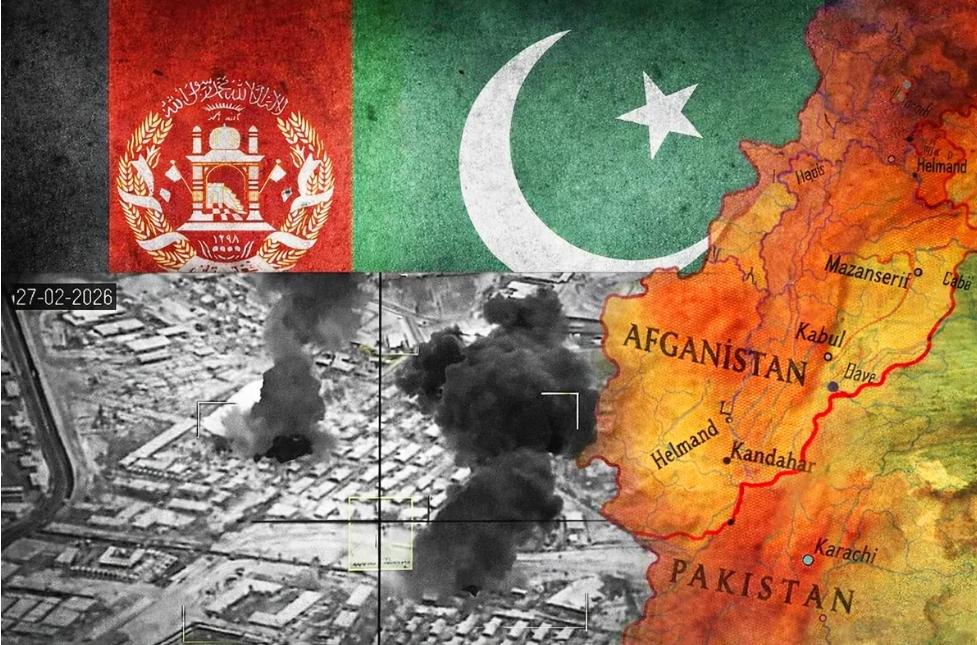
After some strategic recalibration by the incumbent, Pakistan finally decided to stop treating Afghans as mere brethren and follow established diplomatic and legal protocols, like all other countries of the world. The latest cross border aggression by the Taliban last month – while Interim Afghan Foreign Minister, then in India, made a reference to disputed territory of Kashmir as part of India – had to be responded. Immediate ceasefire request through common friends implied rattled Afghan nerves, as they realized that velvet glove is being removed from the iron fist. Three rounds of mediated Pak-Afghan talks have hitherto remained inconclusive though. That trajectory is unlikely to change, as Taliban are still unwilling to let go of their only politico-military leverage against their Eastern neighbour – tolerating and harbouring anti-Pakistan elements and encouraging them to carry out cross border militancy in Pakistan. Afghanistan continues to term terrorism as internal issue of Pakistan, conveniently setting aside its own end of the bargain of Doha agreement; while Pakistan appears willing to use its lethal and dominant kinetic force as final arbiter of any Afghan mis-adventurism.
Being a landlocked country itself, and neigbours with three other landlocked countries, Afghanistan has little hope and much dependencies in trade and connectivity. It also has huge trade imbalance with all its other neighbours (approximately 8-10 times higher imports than exports, for an overall volume of approximately $4Bn) and Pakistan continues to be a free economic-run for Afghans, giving them the easiest and highest earning without any regulation. Abundant economic alternatives exist for major Afghan exports to Pakistan (vegetables, fruits and rugs) from other neighbouring countries (Iran,
Uzbekistan and Tajikistan); while the Afghans exactly know that corresponding matrix for alternate trade is unfavourably stacked against them. Had Pakistan pulled its trade lever when it had aligned itself with global war on terror, Afghanistan would have bled white in such a manner that the two centuries old Clausewitzian dictum would have emphatically been upended – that economy now is the continuation of war, by other means – and proved itself in Pak-Afghan equation.
Unlike other Westphalian states of the day, the current Afghan regime is behaving with disinterest to well-being of its people and to any of their sentiments. With worst credentials of political inclusivity, the Pushtu speaking ideologues sitting atop current interim setup, are essentially indifferent to people at lower end of the tribal hierarchy. The setup however remains marred with vulnerabilities, while it is desperately trying to manage 58% non-Pushtun ethnicities, and no power to adjudicate itself over half the country. The aerial strikes by Pakistan at Kabul, was seen as a heavenly gifted opportunity to unite the disillusioned nation, stoking anti-Pushtun sentiment against Pakistan – a country which houses more Pushtun population than Afghanistan, and much devoted. The Afghans however seem perpetually hostage to all age-old adages, which extol them with embellished historical touch of bravery against outside invaders. Resurgence of the term ‘Graveyard of Empires’ immediately became fashionable in the last month. Understandable; given the historical burden, the Afghans are born with – an absolute necessity for prevalence of tribalism at higher moral pedestal – but fact must be made to distinguish from fiction at today’s critical strategic juncture.
Alexander of Macedon and Mongols are particularly known for successfully brushing aside the local resistance without much formidable effort, unlike others who fought their way in varying degrees. Hindu Shahi dynasty established firm control in Eastern parts of today’s Afghanistan, while Maurya Empire from India had historically controlled most of Afghanistan. Saffarid dynasty, founded by Yaqub Al-Saffar, the Emir of Sistan, Khurasan and Fars, also had modern day Afghanistan under him with its capital at Zaranj in the ninth century. Babur from Central Asia established himself in Kabul for a score of years. Infact most of modern Hazaraites, who live in Afghanistan now, descended from invading Mongols, the other version of which – after Babur’s eastward expansion – became the Mughal Empire in India.
Fast forwarding from far to recent past, the conclusion remains same. The three Anglo-Afghan wars debunk the claim that Afghans beat the invaders. With the exception of the battle at Maiwand (current day Pakistan) in the second Anglo-Afghan war, the Brits defeated Afghan in all three. After the shameful surrender of Afghan ruler Dost Muhammad in the First Anglo-Afghan; the British continued to consolidate their gains and redefined the border after the Second war, with Afghanistan ceding the Frontier Regions.
In the third Anglo-Afghan war, troops of Afghan ruler Amanullah Khan were put to flight, in a stunning display of Royal air power bombing Kabul and Jalalabad, the first aerial campaign in the larger Central Asian region. That told, British departure was more linked to strategic reasons and as a foreign policy imperative, and not a compulsion from military condition on ground. In fact the Afghans in the eighteenth century hardly posed a threat to the global might of the British Empire. While the Englishmen were busy with their most profitable and crowning enterprise of extracting the wealth from the rich subcontinent – which was producing one quarter of global GDP for many centuries in a row – the strategic outreach of Czarist Russia was fast expanding outside Central Asia and was being noted with suspicion in London. Hence the imposed constraint to create a geographical buffer running through inhospitable Hindukush and Pamir Knot. The strategic leitmotif was accurately picked up by Rudyard Kipling, an Indian-British Nobel laureate in his final and most famous novel, Kim; and eternized as ‘The Great Game’.
What had been ubiquitous throughout though, is that schisms of tribalism have always led to mini-statelets – with each demonstrating its own writ and maximizing its individual turf. Which, coupled with notoriously harsh terrain has always meant that centralized governance and control – by invaders or locals regardless – has largely been impracticable; and the region undisputedly, merely been a perennial playground of Empires, certainly not their graveyard. The only prominent variant was noticeable at the turn of new millennia, as Pakistan did great direct and indirect favour not only to Afghans, but also to the world; in breaking up the Communist monolith and helping evaporate global threat to the sole remaining superpower. In the process, the Afghans saw 3 Million deaths (Anthony James Joes, ‘Victorious Insurgencies’, 2010); twice as much maimed, per a safe estimate; and an inestimable internally displaced. The numbers, when juxtaposed with the mere 13 Million pre-war Afghan population, forces one to infer that by the time the last Soviet was crossing the Oxus; the once-vibrant and bustling social pyramid of Afghanistan had lost its whole base. Sheer velocity of Afghan demographic free-fall injects a lot of substance in the argument of Afghanistan being a graveyard; but not for Soviets who lost single soldier for every 200 Afghan killed. Post 9/11, the trend retained; as ISAF lost 2300 soldiers, against tragic death of 75 thousand locals. It was a slaughterhouse! Who in his right mind could have dared to qualify Afghanistan as the graveyard of invaders?
Meanwhile, Pakistan not only helped the US-led international effort in all socio-political domains to rebuild the war-wrecked country; it dared to speak with dissent in true and genuine support of Afghan self-determination. Often accused of running with the hare and hunting with the hounds, Pakistan only laid bare the problem in the hastily conceived ‘democracy’, hatched in incubator of Western invasion, and thrust upon tribal land. That governance architecture lacked inclusivity; a mirror image of current setup, then Pushtuns
being outcast. With unheeded Pakistan’s advice, the un-representative political system was destined not to live past infancy; equally valid today. Einstein was spot-on in defining insanity, as repeating the same experiment and expecting a different result. Pakistan’s stance still remains principled: without inclusivity, the question of current setup meeting its fate no differently, remains only a question of when, and not if. In favour of regional peace, Pakistan still appears committed to resolution of bilateral differences, contingent upon its same single concern i.e. terrorism emanating from Afghanistan; it has perhaps understood now that cornerstone of bilateral engagement needs to be re-shifted and perhaps re-cast.

Muhammad Izhar Alam
Muhammad Izhar Alam Mphil History Quaid-e-Azam University Works as a Research Associate.