Author: Nimra Fatima
South Korea’s KF-21 Could Open a New Door for Pakistan
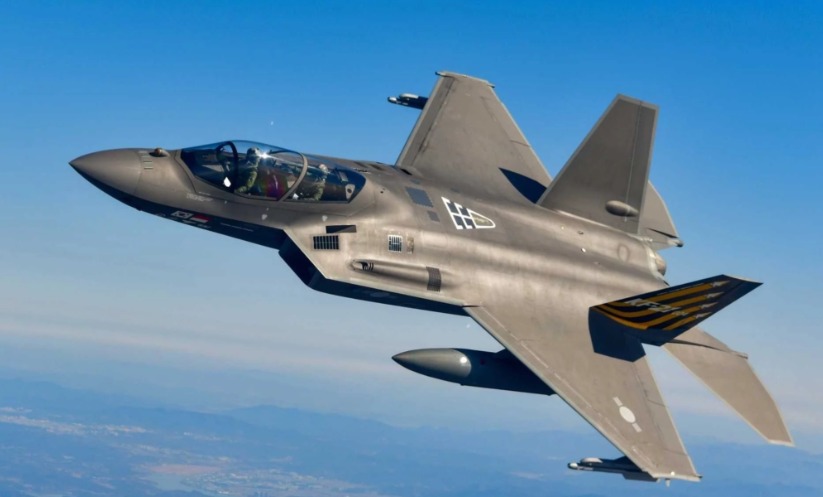
Some of South Korea’s defense export contracts in 2022 reached a total of more than $17 billion, the highest in its history. Buyers included Poland, Australians and the UAE. The most attention garnered was not for a missile or a warship. It was a fighter jet designed, engineered and built from scratch in Seoul. South Korea is no longer just an electronics giant known for Samsung and Hyundai. Over the last decade, it has quietly become one of the world’s most serious defense manufacturers. From tanks and artillery to submarines and fighter aircraft, Seoul is now competing in a space once dominated by the United States, Russia, and a handful of European states. The clearest example of this rise is the KF-21 Boramae fighter jet.
The KF-21 matters because it reflects a new kind of military thinking. Many countries cannot afford platforms like the F-35, while older fourth-generation aircraft are becoming less effective in modern warfare. South Korea saw this gap and decided to build something in between, advanced enough for future combat, but still realistic in cost and maintenance. For Pakistan, this should attract attention.
Pakistan’s defense planning has traditionally relied on a limited number of partners. China remains central to Islamabad’s military modernization, especially through projects like the JF-17 and newer systems such as the J-10C. But relying too heavily on one ecosystem always carries risks. Strategic flexibility matters, especially in a region where security dynamics are constantly shifting. That is why South Korea deserves a closer look.
The Pakistan Air Force has built valuable experience in co-production and aircraft development through the JF-17 program. South Korea, meanwhile, is actively looking for international defense partners and export markets as it expands its industry. There may not be an immediate path toward acquiring the KF-21 itself, but cooperation does not always begin with headline deals.
There are many smaller but important areas where both sides could work together: maintenance, avionics, pilot training, aerospace components, naval systems, or even joint research in emerging technologies. Pakistan’s defense industry needs diversification and modernization. South Korea needs reliable long-term partners in Asia and the Muslim world. The overlap is obvious. This is not only about fighter jets.
South Korea’s defense success comes from something deeper: long-term investment in technology, manufacturing, and industrial planning. It transformed itself from a country dependent on foreign security assistance into a state capable of exporting advanced military systems across the world. Pakistan should pay attention to that model.
Too often, defense discussions in Islamabad focus only on procurement: buying the next aircraft, submarine, or missile system. But the real challenge is industrial capacity. Which countries will actually be able to design, produce, maintain, and upgrade advanced systems over the next twenty years? That is where future military strength will come from. The KF-21 symbolizes that shift.
Of course, there are political realities. South Korea has strong relations with the United States and growing economic ties with India. Any major Pakistan–South Korea defense relationship would have limits. But international politics is rarely black and white. Countries pursue interests, markets, and strategic influence wherever opportunities exist. Pakistan should do the same.
A smarter defense policy is not about replacing one partner with another. It is about expanding options. In an uncertain world, countries that maintain multiple defense and technology relationships are usually the ones with greater strategic freedom.
South Korea’s rise in the defense sector is one of the most important developments in Asia today. Pakistan should not watch it from a distance.

Ms. Nimra Fatima
Nimra Fatima is an Mphil International Relations Scholar at Quaid-e-Azam University, Islamabad.