May 14, 2026

South Korea’s KF-21 Could Open a New Door for Pakistan

South Korea’s KF-21 Could Open a New Door for Pakistan

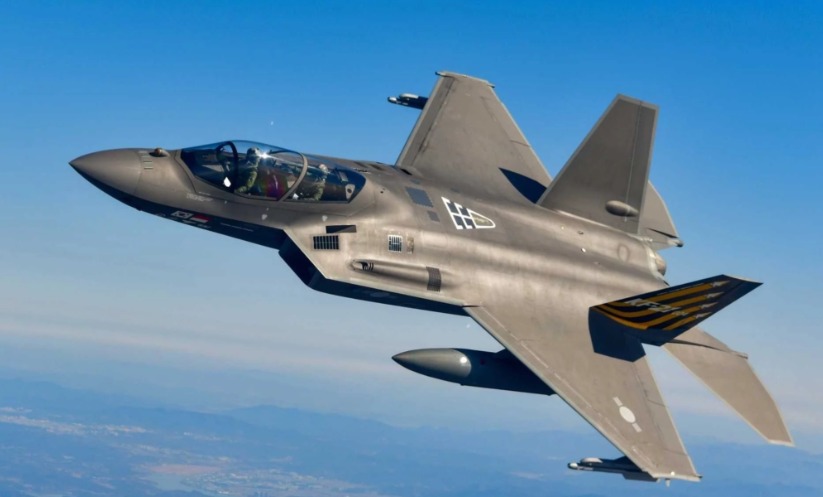
Author: Nimra Fatima South Korea’s KF-21 Could Open a New Door for Pakistan Some of South Korea’s defense export contracts in 2022 reached a total of more than $17 billion, the highest in its history. Buyers included Poland, Australians and the UAE. The most attention garnered was not for a missile or a warship. It was a fighter jet designed, engineered and built from scratch in Seoul. South Korea is no longer just an electronics giant known for Samsung and Hyundai. Over the last decade, it has quietly become one of the world’s most serious defense manufacturers. From tanks and artillery to submarines and fighter aircraft, Seoul is now competing in a space once dominated by the United States, Russia, and a handful of European states.  The clearest example of this rise is the KF-21 Boramae fighter jet. The KF-21 matters because it reflects a new kind of military thinking. Many countries cannot afford platforms like the F-35, while older fourth-generation aircraft are becoming less effective in modern warfare. South Korea saw this gap and decided to build something in between, advanced enough for future combat, but still realistic in cost and maintenance. For Pakistan, this should attract attention. Pakistan’s defense planning has traditionally relied on a limited number of partners. China remains central to Islamabad’s military modernization, especially through projects like the JF-17 and newer systems such as the J-10C. But relying too heavily on one ecosystem always carries risks. Strategic flexibility matters, especially in a region where security dynamics are constantly shifting. That is why South Korea deserves a closer look. The Pakistan Air Force has built valuable experience in co-production and aircraft development through the JF-17 program. South Korea, meanwhile, is actively looking for international defense partners and export markets as it expands its industry. There may not be an immediate path toward acquiring the KF-21 itself, but cooperation does not always begin with headline deals. There are many smaller but important areas where both sides could work together: maintenance, avionics, pilot training, aerospace components, naval systems, or even joint research in emerging technologies. Pakistan’s defense industry needs diversification and modernization. South Korea needs reliable long-term partners in Asia and the Muslim world. The overlap is obvious.  This is not only about fighter jets. South Korea’s defense success comes from something deeper: long-term investment in technology, manufacturing, and industrial planning. It transformed itself from a country dependent on foreign security assistance into a state capable of exporting advanced military systems across the world. Pakistan should pay attention to that model. Too often, defense discussions in Islamabad focus only on procurement: buying the next aircraft, submarine, or missile system. But the real challenge is industrial capacity. Which countries will actually be able to design, produce, maintain, and upgrade advanced systems over the next twenty years? That is where future military strength will come from.  The KF-21 symbolizes that shift. Of course, there are political realities. South Korea has strong relations with the United States and growing economic ties with India. Any major Pakistan–South Korea defense relationship would have limits. But international politics is rarely black and white. Countries pursue interests, markets, and strategic influence wherever opportunities exist.  Pakistan should do the same. A smarter defense policy is not about replacing one partner with another. It is about expanding options. In an uncertain world, countries that maintain multiple defense and technology relationships are usually the ones with greater strategic freedom. South Korea’s rise in the defense sector is one of the most important developments in Asia today. Pakistan should not watch it from a distance. Ms. Nimra Fatima Nimra Fatima is an Mphil International Relations Scholar at Quaid-e-Azam University, Islamabad.

South Korea’s KF-21 Could Open a New Door for Pakistan Read More »

Navigating the Geopolitical Chessboard:

Navigating the Geopolitical Chessboard: Pakistan’s Hedging Strategy Between China andthe United States

Author: Shahid Hayat Introduction: The structure of Strategic Ambiguity Nothing in the history of post Cold War geopolitics could be more continually challenged and yet more thoroughly misinterpreted than the efforts of the Pakistan’s foreign policy to pursue its national agenda towards the People’s Republic of China and the United States of America. Islamabad sits at a strange, risky cross roads in the present international system, deeply involved in China’s Economic Belt and Road Initiative, a history of strategic and military entanglements with the USA and squandered on the windswept interface of what is emerging as a rising Sino-American conflict. It is to assume a simplistic policy flip flopper or opportunist hedging strategy to describe Pakistan’s foreign policy actions is to miss the penetrating rationales behind the operations of a policy machinery which is under the permanent structural constraints. As the growing body of scholarship now suggests, however, what has developed is a complex and carefully calculated approach to hedging: a strategy that aims to induce ambiguity, purposefully fragment alliance possibilities and enhance national returns amid uncertain geopolitical circumstances. Balancing and hedging are not abstract concepts that are merely theoretical, but rather ones that are of critical strategic importance to the operation. In its classic realist sense, balancing means a state using its own resources and/or developing alternative counterweight coalitions to resist a threat it perceives. In contrast, hedging is an adaptive and ambivalent approach that contains aspects of engagement and “quasi balancing,” of cooperative and resistant elements, but at the same time does not fully accept either. Theories of hedging hold that it is the act of a state to mitigate risk through simultaneously pursuing policy options that they believe will achieve mutually offsetting outcomes in the face of a high threat and high uncertainty environment. In essence, it was a baksheesh of strategic non clarity and that is the very framework which reveals Pakistan’s present foreign policy thinking. Historical Foundations: From Alignment to uncertainty What drove Pakistan’s evolution of foreign policy from a true American ally to a nation that practices “double speak” in its relations with Washington is not something that happened overnight. Criticized by Pakistanis for being too tepid in its backing of Islamists, the country is a victim of forty years of bitter history as a great power client. In the immediate post independence period, Pakistan was completely oriented towards the western bloc, having joined SEATO and CENTO, mainly for reasons of security from India and need of economic and military support. Washington did not just offer her aid, but proved be an existential guarantor This alignment, nonetheless, contained the potential for its own breakdown. The United States consistently deliberated that its obligations to Pakistan were consistently secondary to larger American strategic interests, interests that Pakistan did not always endorse and could not always control. The relations with China, on the other hand, was based upon a different cupidity. Since the boundary agreement of 2 March 1963, Sino-Pakistan relations were fueled by shared common antagonism to India, a lack of colonial feelings and a recognition of mutual interests. From its very inception, Beijing viewed the Islamabad as having strategic value and this is eloquently expressed in Chairman Mao Zedong’s directive to his second envoy to Pakistan to view Islamabad as ‘China’s window to the west’. In response, Pakistan did its best to help China in its diplomatic rehabilitation, towards the position especially of Beijing on Taiwan, Tibet and the position in the United Nations Security Council. The opening of Khyber Pakhtunkhwa’s Karakoram Highway (KKH) was merely a formalization of an enduring geopolitical arrangement. But, what is important is that the Sino-Pakistani relationship was not primarily ideological; it was strategic and transactional and such partnerships are more likely to withstand the test of time than ideological ones. The Structural Drivers of Hedging: Disillusionment and Diversification Studying the indicators of these drivers to opt hedging strategies: disillusionment and diversification proved to be constant factors to determine hedging policies of Pakistan. The post 9/11 era seemed to foster new, moderate terms to the Pakistan-US relationship at first glance. Perceived as the ally in the global war on terror, Pakistan received a lot of military and economic support from the coalition, in the form of Coalition Support Fund, Foreign Military Funding, and International Military Education and Training programmes. However, the inconsistencies that were ingrained in this structure were readily apparent from the start. Some specific events were significant structural accelerants of Pakistani disillusionment: American drone strikes on Pakistani territory without any significant notification; suspension of military assistance during Obama and Trump administrations as a result of the lack of action by Pakistan’s security intelligence agencies against militant groups, and the most harrowing – the May 2011 Special Operations in Abbottabad in order to kill Osama bin Laden. The Abbottabad incident was of prime significance. It was denounced by all tiers of the Pakistani political establishment as an infringement on national sovereignty and led to a parliamentary resolution calling on Parliament to review the ties with Washington in general. Closure of NATO supply routes by Pakistan symbolically and materially was a severance with a great intensity. In this context, the growing economic and strategic involvement of China brought not just an alternative option, but a counterweight, an option available to Islamabad which would allow Pakistan to balance off the pressure coming from the United States without completely severing ties with the West. The leaked State to State document, written by former Minister of State, Hina Rabbani Khar and titled ‘Pakistan’s Difficult Choices,’ merely shared an observation long attributed to the Pakistani policymakers: a sense of their inability to navigate between Beijing and Washington without taking sides; and their concern about what they view as an unavoidable strategic shift and how to manage it. The Economic Dimension: CPEC and Dependence No study of Pakistan’s hedging policies is worthwhile without a close examination of the economic aspect of Sino-Paki relationship, and specifically, China Pakistan Economic Corridor. As it has been since

Navigating the Geopolitical Chessboard: Pakistan’s Hedging Strategy Between China andthe United States Read More »